Video Poker Paytables: Structuring Efficiency in Licensed UK Digital Casinos
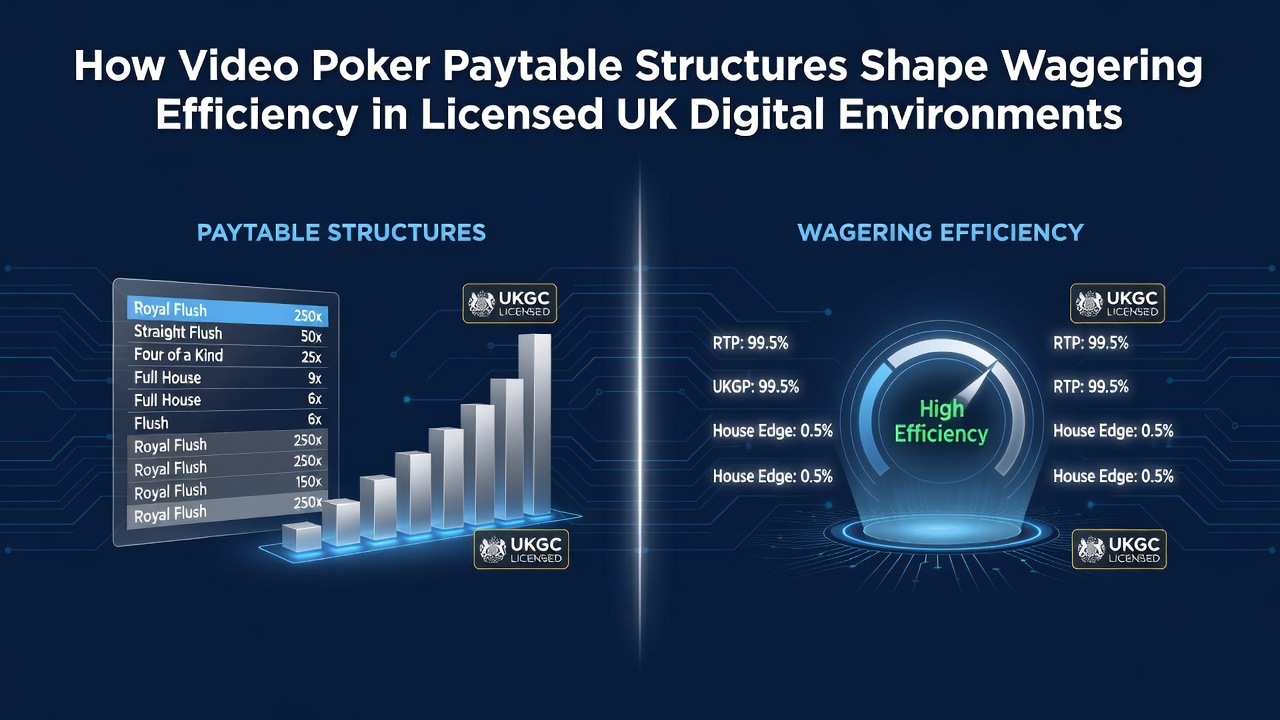
Video poker operates through structured paytables that directly determine return percentages and influence how players allocate wagers across licensed UK digital platforms. These tables list payout values for each hand combination, and operators adjust them according to regulatory frameworks that emphasize transparency and player information standards. Different configurations produce varying theoretical returns, which shape session lengths and bankroll management approaches in environments where software must meet specific technical requirements.
Core Components of Paytable Design
Paytables consist of ranked hands paired with multiplier values that scale according to coin denomination and number of coins played. Full-pay versions return higher percentages than short-pay alternatives because they assign greater credits to strong hands such as flushes and full houses. Software providers integrate these tables into game engines that calculate outcomes using random number generators certified under international testing protocols, and operators in the UK must display complete paytable information before each round begins.
Players encounter variants including Jacks or Better, Deuces Wild, and Double Double Bonus Poker, each featuring distinct payout hierarchies. Jacks or Better tables typically reward a pair of jacks or higher with even money, whereas wild-card games substitute deuces or jokers for missing cards and adjust the hierarchy accordingly. These structural differences alter the frequency of winning outcomes and modify the mathematical distribution of returns over extended play periods.
Return Percentages and Wagering Patterns
Theoretical return percentages range from the low nineties to above 100 percent in optimal full-pay configurations, yet actual figures depend on player decisions and specific table settings. Licensed platforms must publish these percentages, which allows comparison across operators without requiring external verification tools. Higher-return tables encourage longer sessions because the house edge shrinks, while lower-return tables accelerate bankroll depletion even when players follow basic strategy charts.
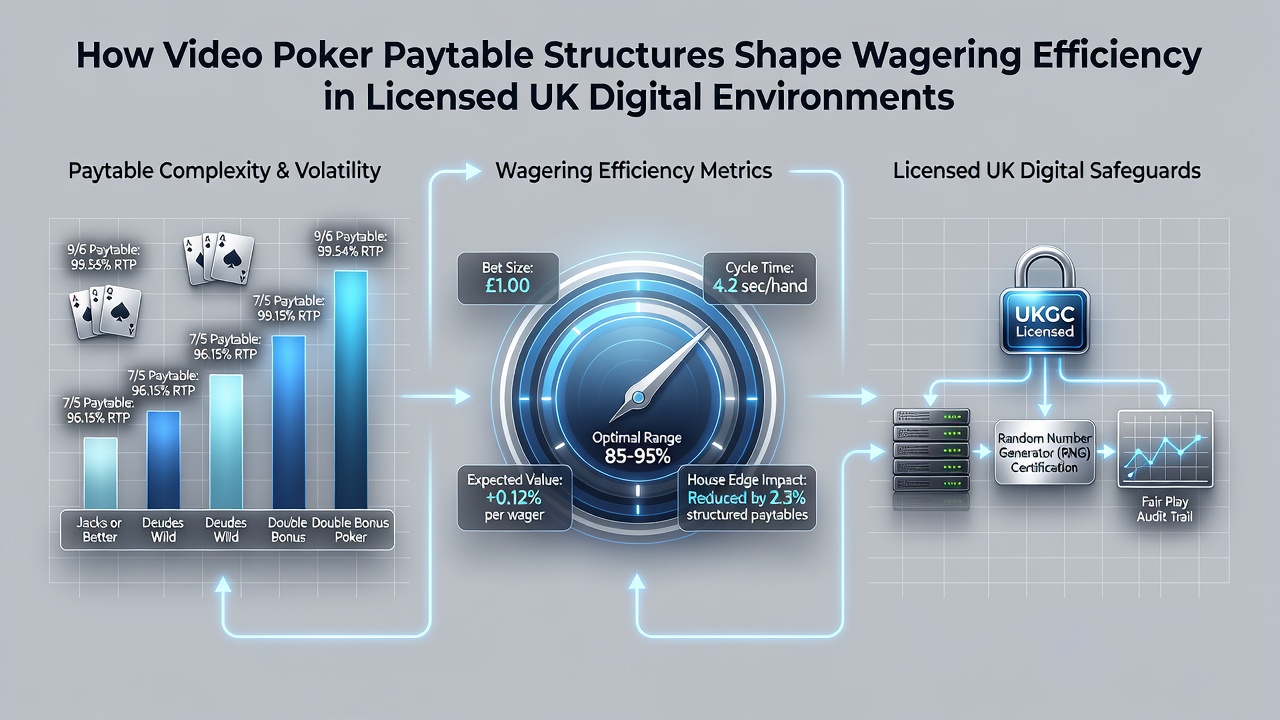
Data compiled by the Nevada Gaming Control Board shows that paytable selection accounts for measurable variance in average wager duration across similar stake levels. Although those figures originate outside the UK, similar analytical approaches appear in reports from the Victorian Commission for Gambling and Liquor Regulation, where researchers tracked session metrics on comparable video poker terminals. Operators adjust maximum coin settings and denomination options to maintain compliance while presenting players with clear efficiency differentials.
Platform Implementation in Licensed Environments
UK digital casinos integrate video poker through remote gaming servers that enforce paytable consistency across devices. Certification bodies verify that displayed payouts match backend calculations, and any modification requires re-testing. This process maintains uniformity so that a player accessing the same title on desktop or mobile encounters identical return structures. Multi-hand formats multiply the effect of paytable differences because each additional hand applies the same payout schedule simultaneously.
Stake limits and autoplay restrictions further interact with paytable structures. Platforms set minimum and maximum bets per hand, which influences how quickly players reach bonus thresholds or loyalty rewards tied to total wagered amounts. June 2026 brought updated technical standards requiring clearer separation between base game paytables and any progressive jackpot contributions, ensuring players distinguish between fixed returns and variable elements before committing funds.
Strategic Adjustments and Efficiency Metrics
Optimal play algorithms calculate expected value for each decision based on the active paytable. Software tools available on some licensed sites display real-time efficiency indicators that compare current hand outcomes against theoretical maxima. These indicators help players recognize when a particular table configuration supports extended play versus rapid resolution.
Industry analyses from the European Gaming and Betting Association indicate that paytable transparency correlates with higher retention rates on video poker products compared with titles lacking immediate payout visibility. Players frequently migrate between operators to access tables that align with their preferred session length and risk tolerance, creating observable movement patterns within the licensed market.
Conclusion
Paytable structures remain central to wagering efficiency because they establish the mathematical foundation upon which all other variables operate. Licensed UK digital environments present these structures through standardized displays that facilitate direct comparison, and ongoing technical requirements ensure continued accuracy. As platforms evolve, the relationship between paytable design and session outcomes continues to guide both operator configuration choices and player selection criteria across the sector.