Inside the Algorithms: How Random Number Generators Shape Outcomes in Modern Video Poker Variants

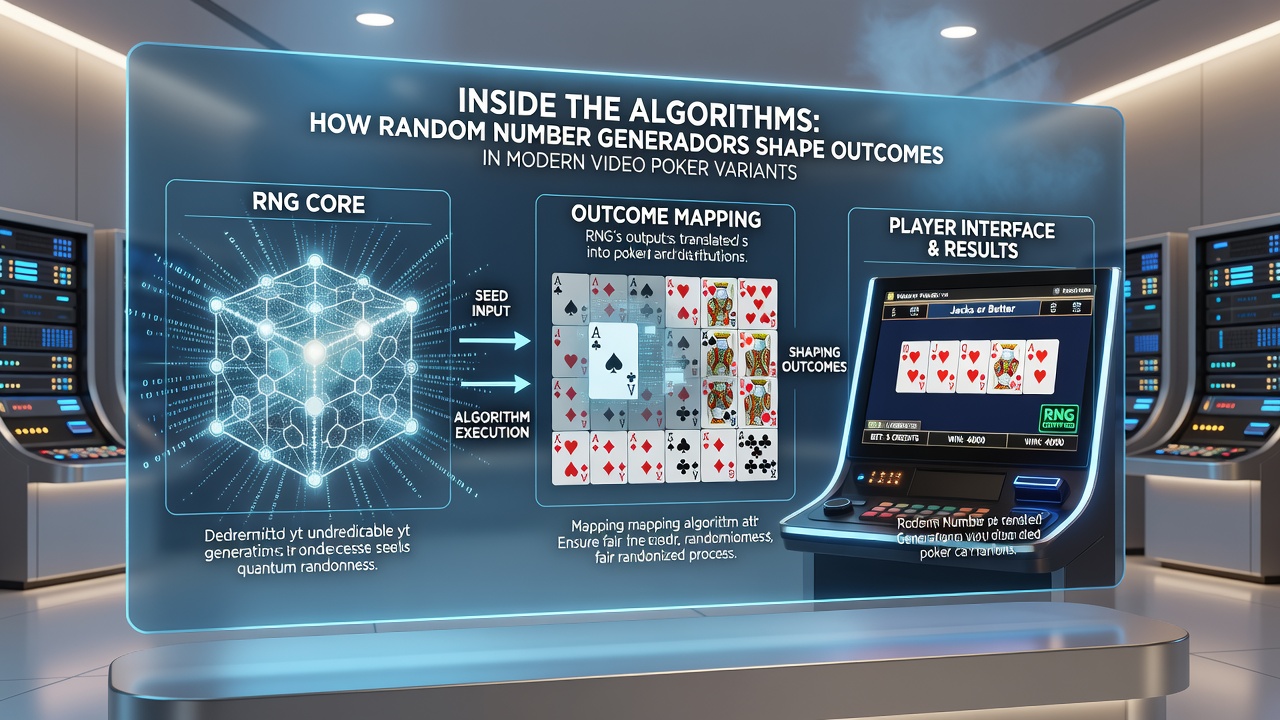
Random number generators form the core mechanism that determines every card dealt in video poker games, adn developers rely on sophisticated algorithms to simulate fair shuffles across digital decks. These systems produce sequences that mimic true randomness while operating through deterministic processes that regulators can test and verify, and modern variants build additional layers such as multi-hand play or progressive jackpots on top of the same foundational RNG code. Observers note that the choice of algorithm directly influences how quickly the game reaches statistical equilibrium and how closely actual results match theoretical probabilities over thousands of hands.
Core Mechanics of RNG in Digital Card Games
Video poker titles use pseudo-random number generators seeded by system time or hardware entropy sources to select cards from a virtual 52-card deck, and each new hand begins with a fresh sequence that prevents predictable patterns from emerging across sessions. Engineers select algorithms like Mersenne Twister or more specialized cryptographic functions because they pass extensive statistical test suites required by gaming laboratories, and these tests examine distribution uniformity, period length, and independence between successive outputs. Researchers have documented that shorter period lengths can create detectable cycles in high-volume play, which is why contemporary platforms favor generators with periods exceeding 2^19937 for titles that support thousands of simultaneous hands.
Impact Across Popular Video Poker Variants
Jacks or Better implementations map RNG outputs to specific card ranks and suits through lookup tables that preserve the exact 52-card composition, whereas Deuces Wild variants introduce wild card substitutions that the same RNG stream must handle without introducing bias toward any particular substitution pattern. Multi-hand games such as Triple Play or Five Play draw additional cards from the remaining deck after the initial deal, and the RNG must maintain proper depletion logic so that the probability of drawing any remaining card stays accurate. Data from certified testing facilities shows that even minor coding errors in deck tracking routines can shift the house edge by several basis points, prompting developers to run millions of simulated hands before release.
Certification Standards and Geographic Testing Bodies
Regulatory frameworks in Nevada require RNG submissions to undergo evaluation by independent labs that apply the Gaming Control Board's technical standards, and similar requirements exist under Australian and Canadian provincial rules that emphasize reproducibility of test results. Nevada Gaming Control Board standards specify minimum entropy thresholds and continuous monitoring protocols that operators must implement on live servers. In parallel, laboratories such as iTech Labs apply ISO 17025 accredited procedures that examine both the generator code and the integration layer connecting RNG output to game logic, and updates implemented in July 2026 have refined the frequency of live audits for platforms offering rapid-fire video poker variants.
Statistical Behavior and Long-Term Outcome Distribution
Over extended play sessions the RNG produces results that converge toward the theoretical return percentages listed on each paytable, and analysts track metrics such as hit frequency and royal flush occurrence rates to confirm alignment with published figures. One study released by researchers at the University of Nevada examined 40 million hands across licensed video poker platforms and found that certified RNG implementations stayed within 0.02 percent of expected values for all major hand categories. Deviations beyond this margin trigger automatic reviews because they may indicate either flawed seeding routines or improper mapping between random values and card indices.
Future Developments in Algorithm Design
Developers continue to explore quantum-resistant generators and hardware-based entropy collectors that further reduce any theoretical predictability, and several major suppliers have begun pilot programs that feed live environmental noise from casino floor sensors into the seeding process. These enhancements aim to maintain compliance with evolving technical standards while supporting new game mechanics such as dynamic paytables that adjust based on player-selected risk levels. Testing protocols continue to evolve in response, requiring fresh statistical validation each time an operator introduces a new variant or updates existing RNG libraries.
Conclusion
Random number generators remain the invisible foundation that ensures every video poker variant delivers outcomes consistent with its mathematical design, and ongoing advances in algorithm strength and certification procedures keep these systems aligned with regulatory expectations worldwide. Continued collaboration between developers, laboratories, and oversight bodies sustains player confidence that digital card distribution reflects genuine probability rather than hidden patterns.