Blackjack Side Wagers: Breaking Down the Probabilities and Player Impacts
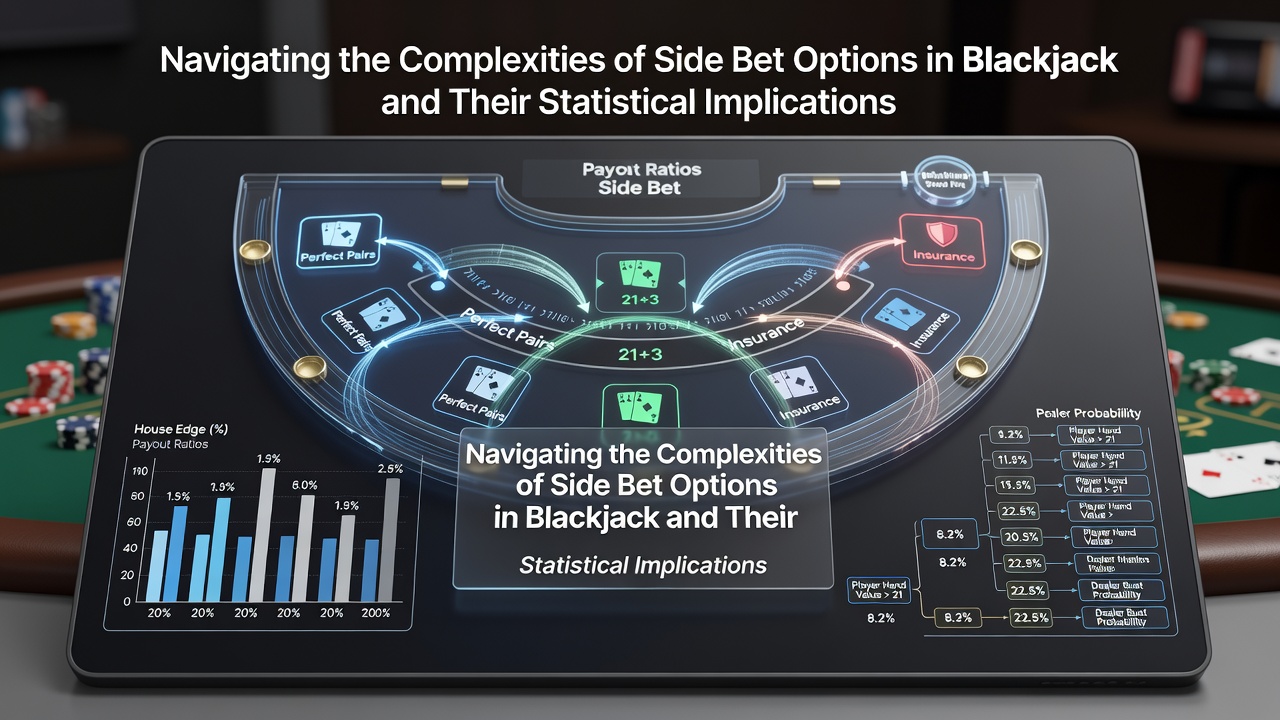
Side bets in blackjack add layers of wagering beyond the main hand, and they carry distinct probability structures that differ sharply from standard play; these options draw players with promises of higher payouts while embedding elevated house advantages that researchers have quantified through extensive simulation and combinatorial analysis.
Common Side Bet Variants and Their Mechanics
Insurance stands as one of the most familiar side bets, activated when the dealer shows an ace, and it pays 2 to 1 if the dealer holds blackjack; the wager resolves independently of the player's main hand and relies on the remaining deck composition for its expected value. Perfect Pairs offers payouts for matching ranks in the initial two cards, with variations such as mixed pairs, colored pairs, and perfect pairs each carrying separate payout tiers that reflect their relative frequencies. 21+3 combines blackjack with poker-style evaluations where the player's two cards plus the dealer's upcard form a three-card hand eligible for bonuses on straights, flushes, or three of a kind, and the game has appeared in multiple jurisdictions since its introduction in the late 1990s.
Additional options include Royal Match, which rewards suited king-queen combinations, and Bet the Set, which focuses on pairs within the player's cards; each variant operates on fixed rules that determine win conditions without altering the core blackjack resolution process. Observers note that these bets integrate into live and online formats across regulated markets, yet their statistical profiles remain consistent regardless of delivery method because the underlying card probabilities do not change.
Statistical Profiles and House Edge Calculations
Data from combinatorial analyses show that insurance carries a house edge of approximately 7.4 percent when the dealer shows an ace, though this figure shifts with deck penetration and removal of tens; players who track remaining cards can reduce or eliminate this disadvantage under specific conditions. Perfect Pairs typically presents a house edge between 2 and 11 percent depending on the paytable and number of decks, with six-deck versions often cited around 4 to 5 percent in published breakdowns. 21+3 edges range from 3.2 to 8 percent according to paytable variations, and research from academic gaming studies indicates that optimal main-hand strategy does not extend to these side options because their independent resolution creates separate expected-value equations.
Simulations performed by probability researchers reveal that side bet frequency of occurrence stays low relative to main-hand outcomes, yet the higher volatility attracts participation; for instance, a three-card straight in 21+3 occurs roughly once every 25 hands under standard dealing procedures. These figures derive from exhaustive enumeration of card combinations rather than sampling, which provides precise long-term return percentages that operators use when setting payout structures.

Integration with Regulatory Frameworks Outside the UK
Regulatory bodies such as the Nevada Gaming Control Board require operators to submit side bet rules and payout schedules for approval, ensuring published house edges align with submitted mathematical models; similar oversight exists through the Australian Gambling Research Centre, which publishes periodic reports on game mathematics across licensed venues. These frameworks emphasize transparency in odds disclosure without mandating specific edges, allowing market variation while maintaining audit trails for compliance verification.
Industry reports from organizations like the European Gaming and Betting Association track adoption rates of side bet features across member states, showing steady inclusion in multi-deck shoe games where card counting impact diminishes; such data helps operators calibrate offerings against player preference patterns observed in aggregated transaction records. In July 2026 several North American properties plan software updates that display real-time side bet return percentages to players, following pilot programs that demonstrated increased session transparency without altering underlying probabilities.
Player Decision Patterns and Long-Term Outcomes
Studies compiled by university gaming laboratories indicate that side bet participation correlates with shorter average session lengths when players chase infrequent high-payout events, because the elevated house edges compound over repeated wagers; one analysis of multi-deck play data found that consistent side bet users experienced a 15 to 20 percent faster bankroll depletion rate compared with main-hand-only participants under equivalent bet sizing. Card counters sometimes incorporate insurance decisions into their systems when the true count justifies the wager, yet they avoid most other side bets because their edges remain negative even at high counts.
Take one operator in a regulated market who adjusted Perfect Pairs paytables after reviewing internal hit-rate data, resulting in a modest reduction of the house edge while preserving player appeal; such adjustments illustrate how statistical monitoring informs product tweaks without changing core game rules. Those who've examined extensive session logs often discover that side bet volume fluctuates with promotional incentives, yet baseline participation persists across demographic segments because the added excitement offsets the documented mathematical disadvantage for many recreational participants.
Conclusion
Side bet options in blackjack expand wagering choices while introducing separate probability structures that researchers quantify through precise combinatorial methods, and regulatory oversight from bodies like the Nevada Gaming Control Board ensures consistent disclosure of those structures across markets. Data shows that house edges vary by variant and paytable, with insurance remaining the most count-sensitive option and others maintaining fixed disadvantages that compound over time. Players who review published return percentages before engaging gain clearer expectations about long-term outcomes, and ongoing industry reporting continues to refine understanding of how these features interact with standard blackjack play across different regulatory environments.