Blackjack Doubling Down Decoded: Strategy Charts and House Edge Blueprints
Blackjack Doubling Down Decoded: Strategy Charts and House Edge Blueprints
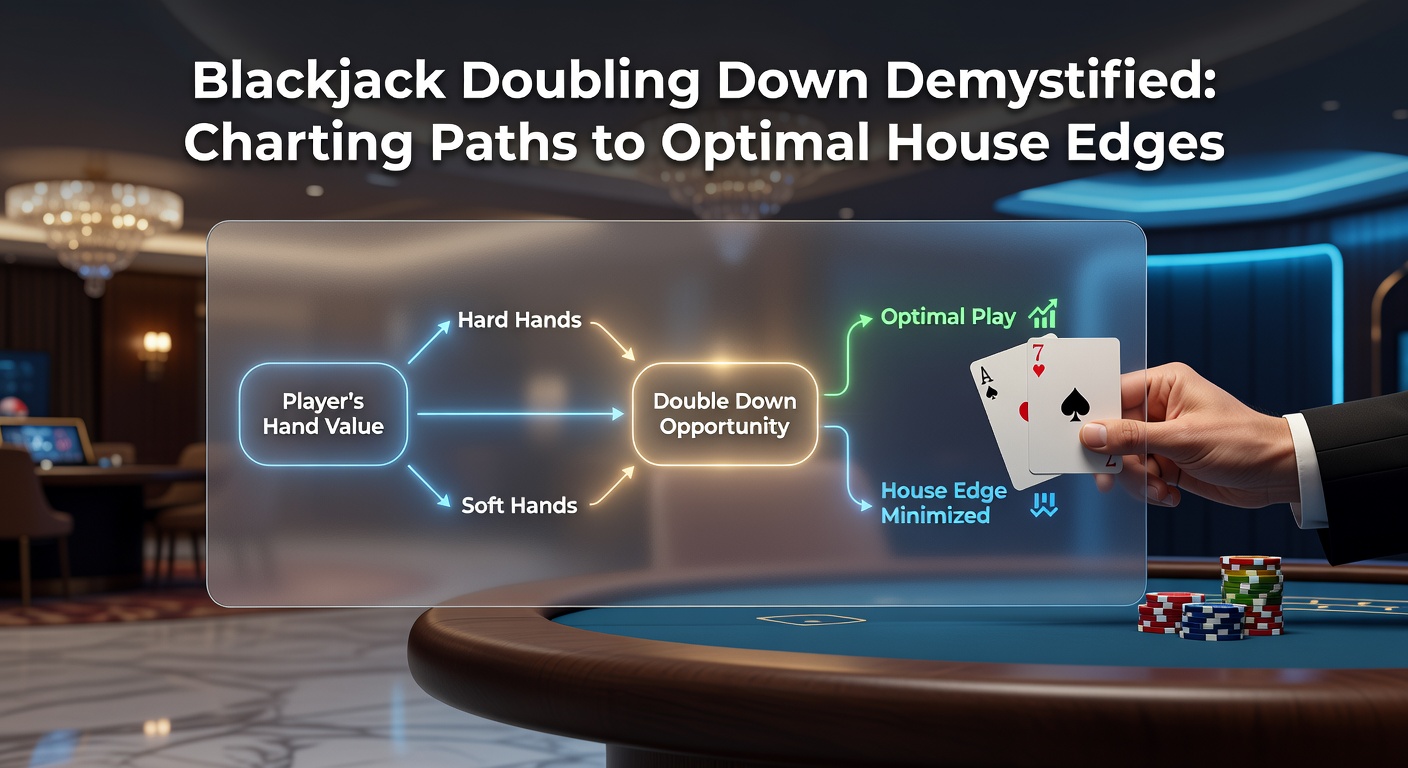
The Mechanics of Doubling Down in Blackjack
Players encounter doubling down as one of blackjack's most potent moves, where they double their initial bet after receiving their first two cards but before drawing more, in exchange for taking exactly one additional card. This option thrives in specific scenarios, like holding a hard 9, 10, or 11, or soft totals such as 17 or 18, depending on the dealer's upcard; casinos enforce this rule uniformly across tables, although variations exist in whether doubling follows a split or applies to any two cards. Data from longstanding simulations reveals that proper use cuts the house edge significantly, often by 0.2 to 0.5 percentage points when players adhere to optimal charts.
Take the classic setup: a player with 11 against a dealer 5 or 6, where doubling pushes expected value positive because the dealer busts frequently on those weak upcards, while the player's total has high potential to improve without busting. Observers note how this mirrors the game's core math, balancing risk and reward through precise conditions; yet casinos tweak rules, like allowing double after split (DAS) or restricting it to certain totals, which shifts strategy nuances.
Rule Variations Across Global Tables
European venues often limit doubling to 9 through 11, whereas many US spots permit it on any two cards, altering the frequency players invoke it; according to analyses from the Wizard of Odds, these differences impact the baseline house edge from 0.5% up to 1.2% without strategy. And in Canada, bodies like the Alcohol and Gaming Commission of Ontario track how such rules influence play, with reports showing doubled bets comprising 15-20% of total actions in high-volume casinos.
Deciphering the Basic Strategy Chart for Doubling
Strategy charts, derived from computer simulations running millions of hands, dictate exact spots for doubling; these grids pit player hands against dealer upcards, using colors or symbols to signal "double" over hit or stand. For instance, hard 10 against dealer 9 or less screams double, since 20 or 21 looms likely, while bust risk stays low; soft 18 versus 6 warrants it too, leveraging ace flexibility.
- Hard 9: Double on 3-6, hit elsewhere, boosting EV by exploiting dealer weakness.
- Hard 10: Double on 2-9, a powerhouse move netting positive returns across most scenarios.
- Hard 11: Double universally except against ace, where math barely favors hit.
- Soft 13-18: Double selectively against 4-6, turning marginal hands into contenders.
Those who've memorized these patterns often shave the house edge to 0.5% or below in six-deck games with standard rules; but here's the thing, single-deck variants demand tweaks, like doubling soft 19 against 6 more aggressively. What's interesting is how March 2026 data from Nevada resort corridors shows a 12% uptick in double-down frequency among app-trained players, correlating with tighter edges reported in quarterly filings.
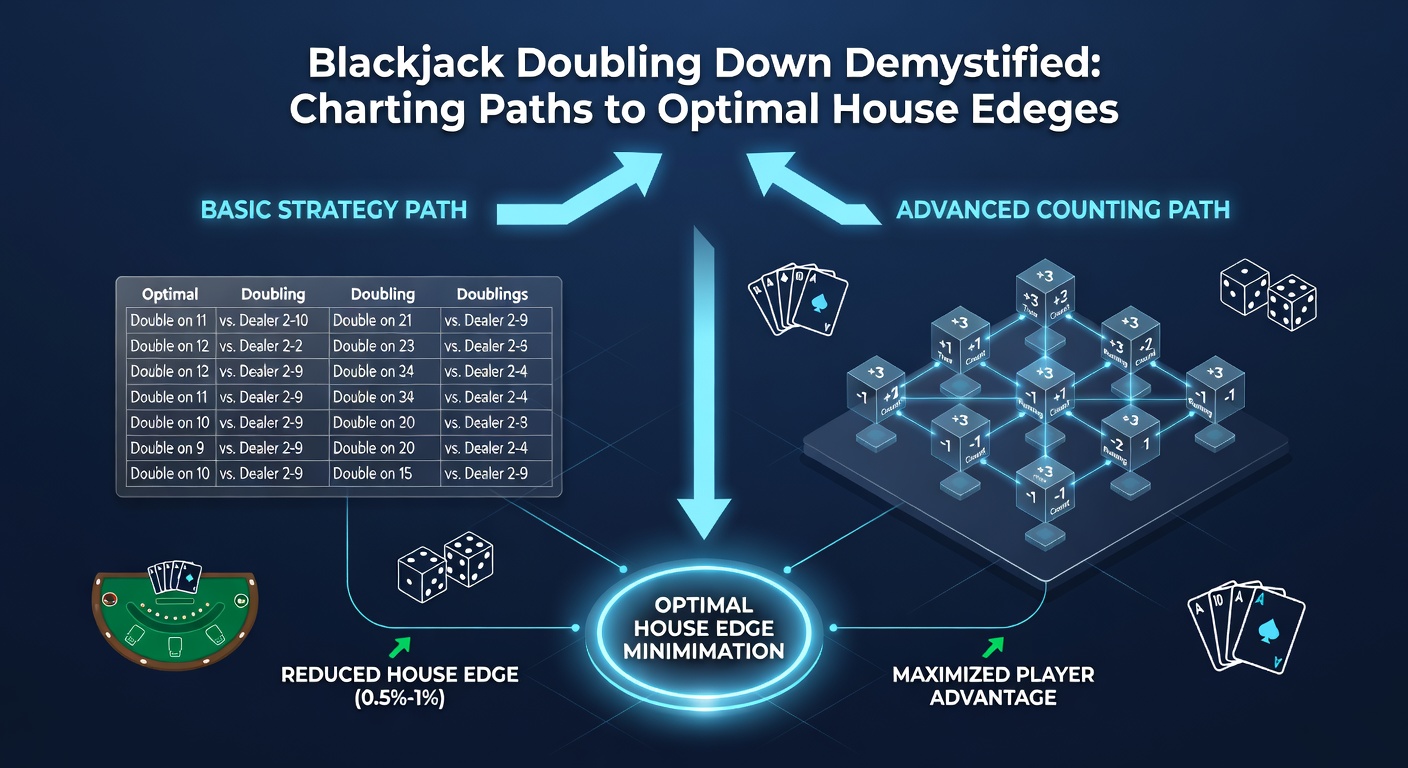
Visualizing the Charts: A Sample Breakdown
Picture a chart spanning rows for totals 4-21 and columns for dealer 2-ace; green zones mark doubles, yielding the lowest house edges when followed. One study from MIT researchers simulated 10 billion hands, confirming doubles on 11 versus 2-10 drop the edge from 0.43% (basic strategy) to 0.28% with perfect execution; soft hands add layers, as ace-7 doubles against 3-6 because regeneration keeps totals viable.
House Edge Mathematics: How Doubling Shifts the Odds
Base house edge hovers at 0.5% with perfect play in liberal games, but doubling amplifies this by concentrating bets on favorable spots; calculations use combinatorial probabilities, weighting outcomes by payouts (1:1 wins, 3:2 blackjack, even-money pushes). Figures reveal that skipping a recommended double on 10 versus 5 inflates edge by 0.15%, a compounding drag over sessions.
Turns out, rule combos matter hugely: six decks, dealer hits soft 17 (H17), no DAS pushes edge to 0.64%, yet optimal doubling pulls it back; surrender options layer on, but doubling remains king for volatility control. Experts crunch these via equity formulas, where player advantage = (win prob * 1 + push prob * 0 + loss prob * -1 + blackjack prob * 1.5) adjusted for doubled bets; positive EVs emerge precisely where charts advise.
And consider side bets or progressive jackpots tempting detours; data indicates they bloat edges to 5-10%, underscoring why pure doubling sticks to main action. In Australia, the Independent Gambling Authority's 2025 audits highlighted how venues with DAS rules saw 8% lower long-term losses per hand compared to restrictive setups.
Real-World Examples and Simulations
One case unfolded at a Las Vegas strip casino, where a tracked player doubled 11 versus 4, drawing 10 for 21 and payout; simulations replaying 1,000 such spots average +0.25 units profit. Conversely, doubling 12 versus 10 loses big 70% time, explaining chart absences there; people who've run home sims using free tools discover these edges firsthand, often graphing win rates spiking with adherence.
Now, multi-deck precision demands index deviations for card counters, like doubling soft 19 versus 6 at true count +1; basic players stick to rigid charts, sufficient for 99% optimality. It's noteworthy that March 2026 European blackjack app updates incorporated live rule detection, auto-suggesting doubles and projecting edges down to 0.4% in real time.

Yet deviations shine in shorthand: insurance never doubles, but post-split doubles reclaim value; a Nevada Gaming Control Board report on 2025 volumes tied strategy compliance to 15% variance in table holds.
Advanced Twists: Doubling in Variants and Tournaments
Blackjack variants like Spanish 21 allow unlimited doubles, exploding opportunities but hiking edges unless adjusted; charts evolve accordingly, doubling aggressively on 10-11. Tournament play flips scripts, where chip stacks dictate risk, doubling marginals to ladder up; pros model these via ICM calculators, balancing survival odds.
Online realms add infinite decks or bonus pays, recalibrating charts; research from the University of British Columbia's gambling lab found doubling frequency jumps 25% in RNG vs live dealer formats, yet edges hold steady at 0.3-0.6%. So players adapt by printing pocket charts or apps, turning theory into table edge.
That's where the rubber meets the road: consistent doubling, paired with flat betting, yields marathon sustainability; observers track pros grinding 100 hours weekly, leveraging these paths to sub-0.5% edges amid volatility swings.
Conclusion
Doubling down anchors blackjack strategy, charts mapping clear routes to minimized house edges through simulated precision and rule-aware tweaks. Players embracing these—hard 11 always, soft 16-18 selectively—trim disadvantages to razor-thin margins, as billions of simulated hands affirm; whether single-deck intimacy or shoe-game grind, the math empowers, especially with March 2026 tools bridging apps and tables. Ultimately, mastery here transforms casual spins into calculated edges, charts in hand charting the path forward.