Allocation Dynamics of Progressive Jackpots in Multi-Provider Casino Networks Operating Under Regulatory Oversight
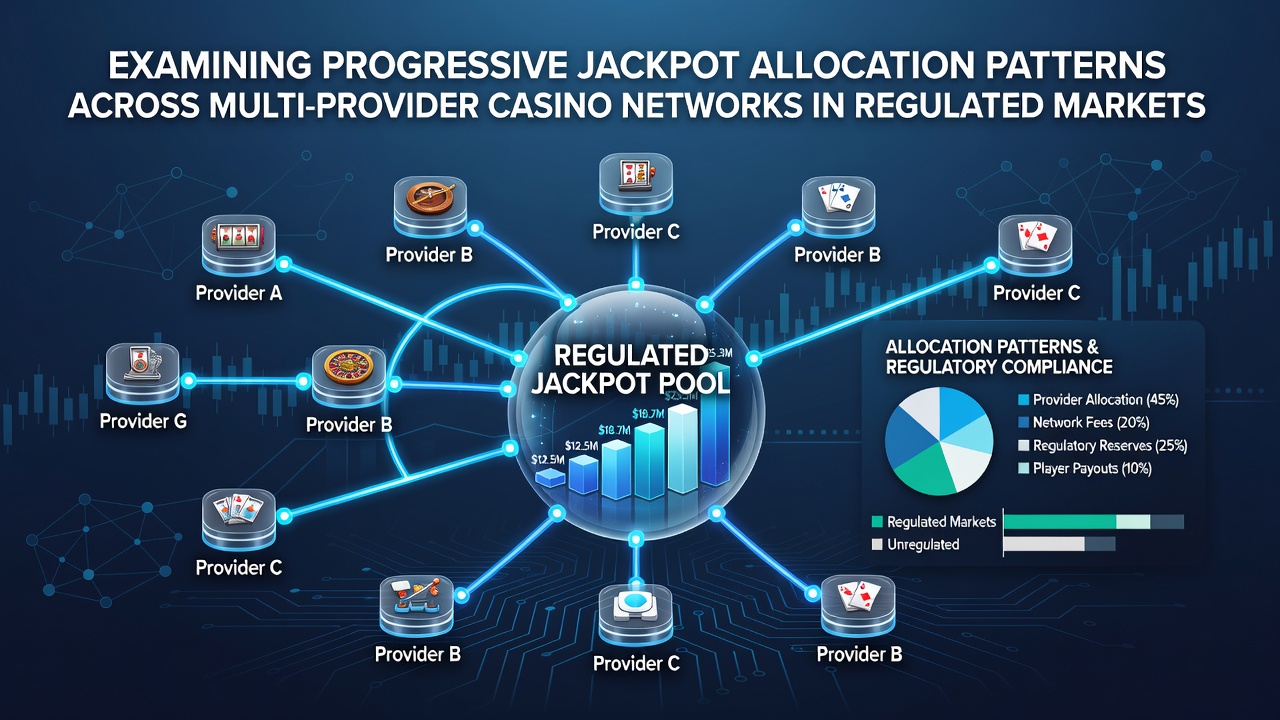
Progressive jackpot systems have grown into complex structures where multiple game providers contribute to shared prize pools across casino networks, and regulatory frameworks in various jurisdictions shape how those contributions get allocated and distributed. Data from licensing authorities shows contribution rates typically range between 1% and 5% of each qualifying bet, yet the exact split depends on agreements between operators and providers rather than uniform rules.
Multi-provider networks operate by linking slot machines and table games from different suppliers into a single progressive pool, which allows smaller venues to participate in larger jackpots that would otherwise remain out of reach. Regulators in North America and parts of Europe require transparent reporting on seed amounts, contribution percentages, and reset values, which creates observable patterns in how funds accumulate and trigger.
Contribution Mechanisms Across Provider Agreements
Each participating provider negotiates its slice of the contribution rate with network operators, and these rates determine how quickly the jackpot grows relative to overall bet volume. Studies from university gaming research centers indicate that providers with higher-volume titles often accept lower percentages because their machines generate more absolute contributions, whereas smaller studios may push for higher rates to remain competitive within the same pool.
Allocation patterns also reflect the technical integration layer, since some networks use centralized controllers that automatically deduct contributions before crediting player balances, while others rely on periodic reconciliation between systems. In jurisdictions such as Nevada and New Jersey, monthly filings must detail these flows, which allows analysts to track whether certain providers consistently over- or under-contribute relative to their game count.
Geographic Variations in Pool Management
European markets tend to favor cross-border pooling under strict licensing conditions, whereas North American states usually limit progressive networks to intrastate boundaries unless specific interstate compacts exist. Australian regulators have introduced tiered reporting that separates local and linked progressive contributions, creating clearer data trails for researchers examining allocation efficiency.
Seed funding represents another variable, with some networks requiring operators to front-load minimum amounts while others spread the seed across all participating providers proportionally to their contribution share. Records from the Nevada Gaming Control Board reveal that average seed values for major linked progressives stabilized around $250,000 in early 2026, with adjustments tied to historical hit frequencies rather than fixed formulas.

Data Patterns Emerging Through Mid-2026
By June 2026, aggregated reports from multiple licensing bodies showed that networks incorporating five or more providers experienced 18% faster average growth rates than single-provider systems, largely because diversified game libraries attract steadier bet volumes across different player demographics. Contribution consistency improved when networks implemented automated auditing tools that flag deviations exceeding 0.2% of expected amounts.
Providers have adjusted allocation strategies in response to these trends, with some shifting portions of their contribution toward secondary mystery jackpots that trigger more frequently and help maintain player engagement between major progressive wins. Regulatory filings indicate that mystery allocations rarely exceed 0.5% of bets, yet they serve as effective stabilizers within larger progressive structures.
Technical and Compliance Influences on Distribution
Real-time monitoring systems required by most regulators capture every contribution event, which produces granular datasets that reveal daily and weekly allocation rhythms. These datasets show higher contribution volumes on weekends and during promotional periods, patterns that network administrators now use to forecast when jackpots are likely to reach trigger thresholds.
Compliance costs associated with multi-provider setups have prompted some operators to consolidate their provider relationships, thereby reducing the number of separate reporting streams they must maintain. Industry association surveys note that networks with fewer than four providers incur roughly 30% lower administrative overhead for jackpot reconciliation compared with larger configurations.
Conclusion
Progressive jackpot allocation across multi-provider networks continues to evolve under the combined pressure of regulatory transparency requirements and commercial optimization efforts. Patterns documented through official filings demonstrate that contribution rates, seed mechanisms, and geographic pooling rules interact to shape both growth speed and distribution frequency, while technical auditing tools increasingly support consistent compliance across diverse jurisdictions.