Accumulator Bets in Football Markets: Understanding Mechanics and Return Dynamics
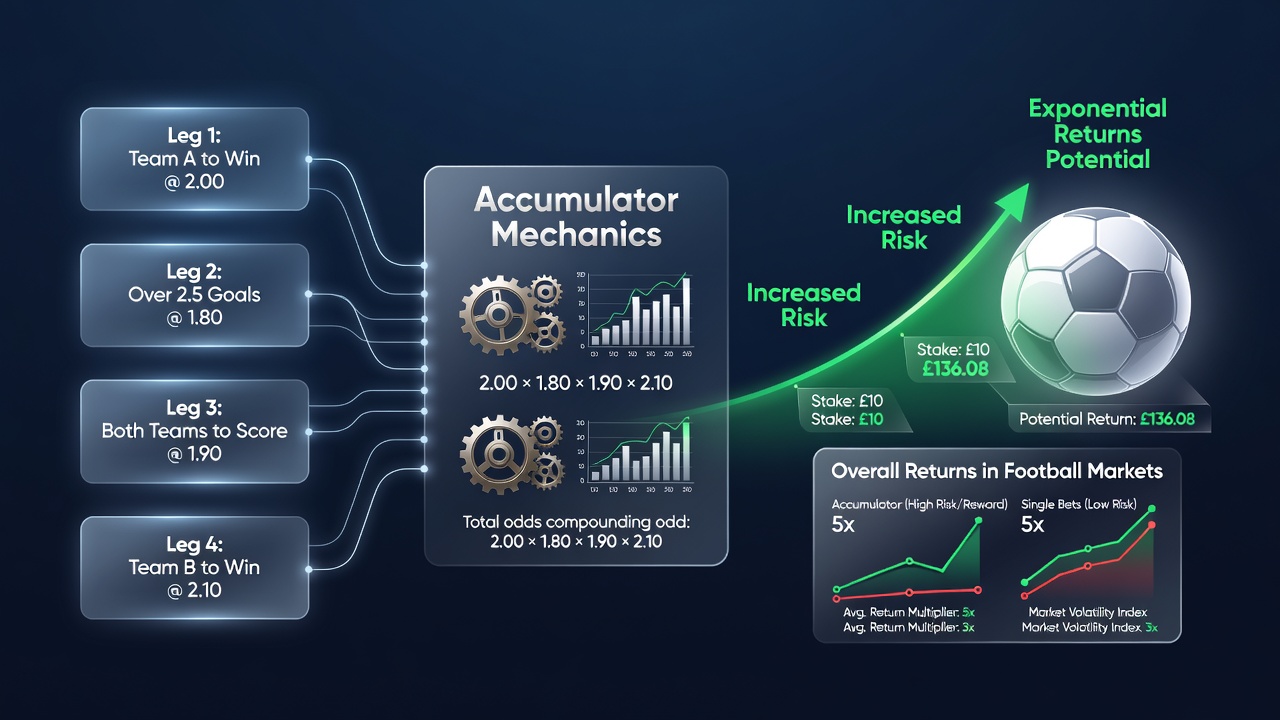
Accumulator bets combine multiple selections into a single wager where each outcome must succeed for the bet to pay out, and the odds multiply together across every leg while the stake remains fixed at the initial amount. This structure creates amplified potential returns compared to individual bets yet demands perfect accuracy across all chosen events.
Football markets lend themselves particularly well to accumulators because of the volume of available fixtures each week and the range of bet types such as match results, both teams to score, or over/under goals. Bettors often select between four and ten matches to build these wagers, and the multiplied odds can turn a modest stake into a substantial payout when every selection lands.
Core Mechanics of Accumulator Construction
Each leg in an accumulator carries its own odds that reflect the probability assigned by the bookmaker, and the final payout multiplier equals the product of all individual odds. A four-leg accumulator featuring selections at 1.80, 2.10, 1.65, and 1.95 produces a combined multiplier of 12.29, so a £10 stake returns £122.90 if successful while losing the entire stake if any single leg fails. Bookmakers apply no additional fees beyond the built-in margin already present in the quoted odds.
Platforms calculate these multipliers automatically once selections are added, and bettors can adjust stake amounts to preview potential returns before confirming the wager. Some operators allow cash-out options on accumulators before all legs complete, which introduces an early exit point that converts the current combined probability into a guaranteed partial return.
Impact on Overall Returns Across Football Markets
Statistical analysis shows that accumulators produce lower long-term returns than single bets because the probability of success declines exponentially with each added leg. A bettor who correctly predicts 60 percent of individual football outcomes faces only a 13 percent chance of completing a four-leg accumulator, and that figure drops further when selections span different leagues or include lower-probability markets such as correct scores.
Data from industry tracking services indicates that average returns on accumulator bets in major European football leagues sit between 70 and 85 percent of total stakes over large sample sizes, a range that aligns closely with the theoretical house edge embedded in the odds. Higher multipliers attract larger interest during high-profile weekends such as those in the Premier League or Champions League, yet the increased volume does not alter the underlying payout ratio.
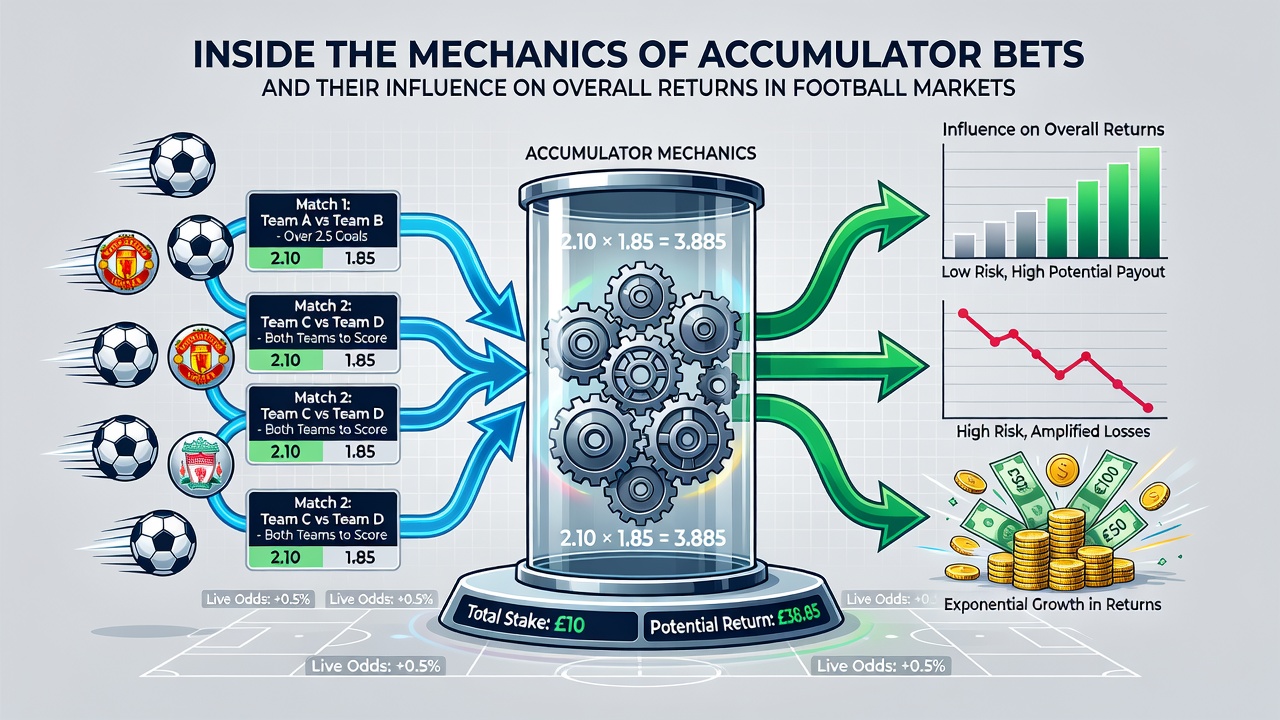
Research published by academic groups examining European football data finds that accumulators built solely from higher-probability selections, such as favoured teams to win at home, still underperform single bets in expected value because the multiplication effect magnifies even small edges held by bookmakers. Observers tracking betting patterns through 2025 and into June 2026 note continued growth in accumulator volume during international tournament periods when fixture density rises.
Market-Specific Considerations in Football Betting
Football offers distinct market types that influence accumulator construction differently. Match-result selections typically carry lower individual margins than goal-related markets, so accumulators built from win-draw-win outcomes often show slightly better theoretical returns than those mixing in over/under or Asian handicap lines. Live betting accumulators add another layer because odds shift in real time, allowing bettors to add legs after matches begin yet requiring constant monitoring of in-play developments.
League-specific factors also matter. Data from North American regulatory reports on sports wagering reveals that accumulators featuring matches from multiple continents introduce additional variance due to differing team forms, travel schedules, and weather conditions that bookmakers already price into the odds. Bettors who restrict selections to a single domestic league sometimes achieve marginally higher completion rates according to aggregated platform statistics.
Calculation Tools and Return Projections
Most licensed operators provide built-in calculators that display projected payouts and implied probabilities for any accumulator combination. These tools update automatically when new legs are added and can highlight the cumulative margin across the entire bet. Independent comparison sites outside the UK market, such as those referenced in responsible gambling research portals, publish periodic reviews of accumulator performance that help illustrate long-term trends across different operators.
Advanced users sometimes employ spreadsheets to model various accumulator sizes against historical football results, testing how changes in leg count or odds range alter expected returns. Such modelling consistently shows that extending beyond six or seven legs reduces the probability of success faster than the multiplier grows, producing diminishing returns on additional risk.
Conclusion
Accumulator bets remain a popular format in football markets because they combine multiple outcomes into one wager with multiplied odds that create larger potential payouts from small stakes. Their mechanics require every selection to succeed, which lowers overall completion rates and produces lower long-term returns compared with single-match bets. Market data and research studies continue to document these patterns across major leagues and tournament periods, providing bettors with clear statistical context when constructing or evaluating such wagers.